Casinos That Accept Tether USDT in Australia: What’s Verified
 Available in AU
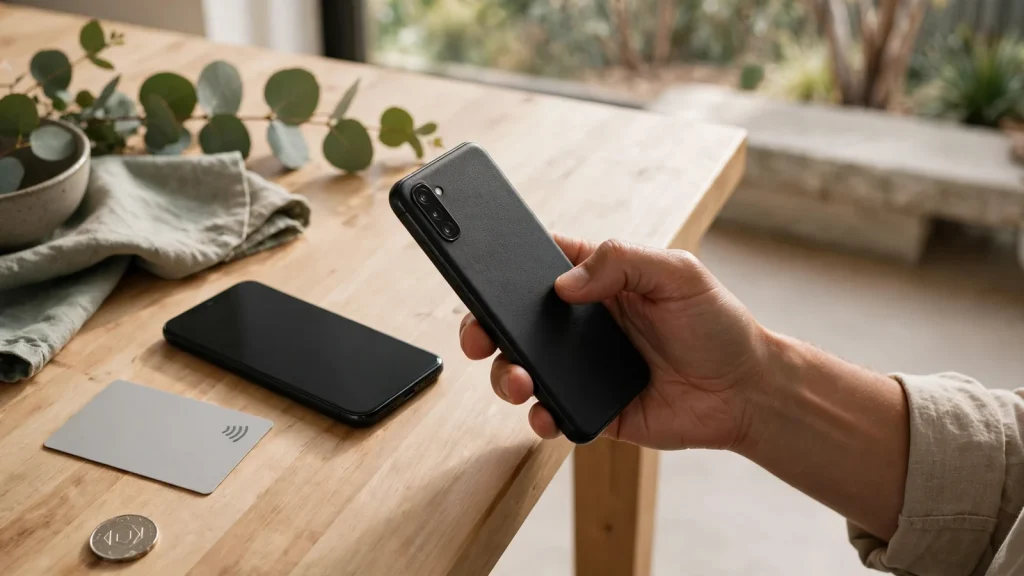
Everyday payment habits do not verify casino USDT support, and crypto claims need to be checked separately from play features.
Table of Contents
- How Australians Pay Online—and What That Does Not Tell You About USDT
- What Can Be Verified Before Calling a USDT Casino “Best”
- Online Casino Claims and the Checks That Still Apply
- Bonuses and Slots: What the Available Evidence Cannot Confirm
- Game Selection Is Not Established by a USDT Payment Claim
- USDT, TRC20 and the Limits of the Available Payment Evidence
- What “Accepts Tether” Needs to Mean—and What Is Unverified
- Playing With Tether: Separate the Payment Question From the Play Claim
- Live Dealers and Tether: No Verified Platform Details
- Deposits, Withdrawals and the Difference Between Crypto in General and USDT
How Australians Pay Online—and What That Does Not Tell You About USDT
In Australia, paying by tapping a card or phone is part of ordinary life. Contactless credit and debit cards are accepted almost everywhere, and mobile wallets such as Google Pay and Apple Pay are similarly widespread. Many people are also comfortable moving between cards, mobile wallets and services linked to banks, including PayPal. That familiarity helps explain why a payment option can look routine at first glance. It does not establish that the same option is available for every kind of transaction.
The distinction matters when you encounter claims about Tether, also known as USDT, and online casinos. Familiarity with contactless payments, Apple Pay, Google Pay or PayPal says something about Australian payment habits. It does not show that a particular service accepts USDT, or that it accepts any particular payment method for a particular purpose. One payment category cannot stand in for another simply because both appear on a page about paying online.
There is also an important difference between being able to use a payment method in everyday commerce and being able to use it for gambling. Australians may be accustomed to using cards and phone wallets for ordinary purchases, but that does not make every online transaction lawful or available. The Interactive Gambling Act 2001 prohibits operators from providing real-money online casino games to people physically in Australia. A familiar payment logo cannot change that legal position.
If you’re looking for an Australian casino to use with Tether USDT, check that the operator currently supports USDT deposits and withdrawals before signing up. The details below highlight the specific licensing, payment, or payout information available for each option.
1. WinSpirit Casino
License: Curacao eGaming OGL/2024/923/0383 (Antillephone N.V.) · Min. deposit: A$30 You can note its Curacao eGaming OGL/2024/923/0383 licence, issued through Antillephone N.V., and its A$30 minimum deposit.
2. Roby Casino
License: Curacao eGaming (Roby Games Ltd) You can note that Roby Casino is listed as operating under a Curacao eGaming licence held by Roby Games Ltd.
3. Playfina Casino
License: Curacao eGaming (Hollycorn N.V., since 2017) · Min. deposit: A$20-30 (depends on the offer) You can note its Curacao eGaming licensing through Hollycorn N.V., in place since 2017. The stated minimum deposit is A$20–30, depending on the offer.
4. Neospin
License: Curacao Gaming Control Board OGL/2023/176/0095 (Hollycorn N.V.) You can note its Curacao Gaming Control Board OGL/2023/176/0095 licence, held by Hollycorn N.V.
5. SpinsUp
License: Curacao Gaming Control Board OGL/2023/174/0082 (Dama N.V.) You can note its Curacao Gaming Control Board OGL/2023/174/0082 licence, held by Dama N.V.
6. JeetCity Casino
License: Curacao eGaming (Dama N.V.) You can note that JeetCity Casino is listed as operating under a Curacao eGaming licence held by Dama N.V.
7. MrPacho
Payout speed: crypto 30-120 minutes, fiat 24-72 hours · Min. deposit: A$30 You can note the stated crypto payout window of 30–120 minutes, compared with 24–72 hours for fiat payouts. The minimum deposit is A$30.
8. Lucky Dreams
License: Curacao · Min. deposit: A$20 (POLi) You can note its Curacao licence and A$20 minimum deposit via POLi.
9. House of Pokies
License: international iGaming licence – jurisdiction not named in the source · Payout speed: PayID 1-24 hours · Min. deposit: A$30 (PayID from A$10) You can note that its international iGaming licence is listed without a named jurisdiction. PayID payouts are stated as taking 1–24 hours; the minimum deposit is A$30, or A$10 for PayID.
10. SkyCrown
License: Tobique Gaming Commission · Payout speed: crypto ~10-15 minutes, fiat 1-5 days · Min. deposit: A$30 You can note its Tobique Gaming Commission licence and stated payout times: around 10–15 minutes for crypto and 1–5 days for fiat. The minimum deposit is A$30.
A page that lists payment brands may leave several separate questions unresolved. Does the service actually support the named method? Does the claim apply to Australian users? Is it about an ordinary purchase, or about a gambling transaction? Does it refer to Tether itself, or to some other way of paying? These are not details that can be answered by pointing to the widespread use of contactless cards or mobile wallets across the country.
The same caution applies to terms that sound interchangeable but are not. A card, a mobile wallet and a bank-linked service are distinct ways of arranging payment. Tether is named in a different payment context. Seeing one method described as convenient or widely used does not establish anything about another method’s availability. Nor does the fact that a service operates online tell you what it accepts.
This can be easy to miss because payment pages often present options side by side. A row of familiar logos may make a service seem locally usable, while a separate reference to USDT may create the impression that the two claims reinforce each other. They do not. Each payment claim needs to be understood on its own terms, and the presence of ordinary Australian payment methods is not evidence for a Tether-specific claim.
Casinos That Accept Visa in Australia: What to Know · Casinos That Accept Google Pay in Australia
For a reader comparing what a page says with what is actually established, the safest starting point is to keep the categories separate. Cards and mobile wallets are common in everyday Australian payments. Bank-linked services such as PayPal are also familiar to consumers. None of those points confirms that USDT is supported by an online casino, and none should be read as a recommendation to use an offshore gambling service.
This separation is useful even before considering any technical details. A payment method’s name is not proof of acceptance; a familiar brand is not proof that a transaction is permitted; and the general availability of digital payments is not evidence that a service is available to Australian residents. The wording on a payment page may blur those distinctions, but the distinctions remain.
If a claim combines an Australian audience, an online casino and Tether, treat each part as a separate assertion rather than assuming one supports the others. The fact that Australians readily switch among cards, mobile wallets and bank-linked services describes the country’s general payment culture. It cannot tell you whether a casino accepts USDT. That question requires evidence about the specific service and the specific payment claim—not an inference from how people pay for other things.
What Can Be Verified Before Calling a USDT Casino “Best”
“Best” is a comparative claim, not a feature of a payment method. A site being described as a Tether casino does not, by itself, establish that it is better than another site, suitable for Australian residents or even available to them. Those are separate claims, and each needs support of its own.
Attention: A site being described as a Tether casino does not establish that it is suitable for Australian residents or even available to them.
A meaningful comparison would need to use the same standards for every service being assessed. It would also need evidence that is current, specific and attributable: a broad description of a site as “crypto-friendly” cannot establish what it supports, while a payment reference cannot stand in for an assessment of the whole service. Without a consistent basis for comparison, a ranking may look precise while leaving the important questions unanswered.
The word “best” can also hide different priorities. One reader may care about whether a payment method is supported; another may care about the terms attached to an account or the service’s reliability. Those are not interchangeable measures. A label that does not say what is being compared, or how, gives you little basis for deciding whether the judgment matches your needs.
The same distinction applies to claims about a bonus, games or pokies. A positive statement in one area would not prove anything about another. A payment claim cannot establish the quality or range of entertainment, and an attractive offer would not demonstrate that a service is lawful or accessible to people in Australia. Treating several separate claims as one overall endorsement is a shortcut, not a comparison.
“Latest” is another word that needs care. A recent-sounding description does not show when the relevant information was checked or whether it still applies. Payment arrangements, terms and access can change. A date attached to one detail would not automatically make every other claim about the same service current.
Casinos That Accept Neteller in Australia: What to Check · POLi Casinos in Australia: What the Evidence Shows
Nor does a list of names, on its own, amount to a useful comparison. A list can tell you which services someone chose to include, but not why they belong together or whether the same criteria were used for each. If a list presents a winner without explaining the measure behind it, the ranking is hard to interpret. The format may be convenient; the evidence still has to do the work.
For Australian readers, a further distinction matters more than any ranking language: an offshore service’s presentation is not the same thing as legal permission to provide online casino gambling here. The Interactive Gambling Act 2001 makes it illegal for operators to provide real-money online casino games to people physically located in Australia. Australian consumer law does not protect players who use offshore casinos. A “best” label does not change either point, and it should not be read as an assurance of local protection.
This makes broad endorsements particularly poor substitutes for facts. A site may be described in confident terms without that description showing who stands behind the claim, what was assessed or whether the assessment applies to Australian users. The more consequential the decision, the less useful an unexplained adjective becomes. “Best” is not a guarantee, a regulatory status or evidence of consumer protection.
A careful reader can therefore separate the parts of a claim instead of accepting them as a package: what is being asserted, what the assertion actually establishes, and what it leaves untouched. That approach does not produce a recommendation by itself. It prevents a payment-related label from being mistaken for an overall judgment about quality, suitability or safety.
Comparison Criteria
- Use consistent standards for every service assessed
- Ensure evidence is current, specific, and attributable
- Separate payment claims from overall quality or safety judgments
- Distinguish offshore presentation from legal permission to operate in Australia
No ranking word can resolve those distinctions. A comparison only earns its conclusion when its criteria and supporting evidence are clear, relevant to the same market and applied consistently. Without that foundation, calling a Tether casino “best” is an opinion dressed as a result—not a reliable basis for choosing an offshore gambling service.
Online Casino Claims and the Checks That Still Apply
A claim that an offshore site accepts Tether does not settle whether the service may lawfully offer casino games to people in Australia. Payment language and legal status are separate questions. Descriptions such as “online casino” or “pokies” do not change the rules that apply to real-money gambling services.
Under the Interactive Gambling Act 2001, operators must not provide real-money online casino games to people physically in Australia. That prohibition covers casino-style services such as poker, table games and pokies. The law is directed at the operator: it does not explicitly make an individual player’s use of an offshore site a criminal offence. That distinction is important, but it should not be mistaken for approval of the service or a guarantee that it will remain accessible.
The Australian Communications and Media Authority (ACMA) enforces the Act. Offshore status does not create a local entitlement to offer prohibited services to Australians. Nor does a foreign licence amount to Australian authorisation. If a site makes a claim about its location, licence or availability, those statements do not override the Australian rules.
Casinos That Accept Mastercard in Australia: Legal Limits · Casinos That Accept MiFinity in Australia: What to Know
There is also a consumer-protection consequence. Australian consumer law does not protect players who use offshore casinos. If a dispute arises over an account, a payment or a refusal to pay winnings, you should not assume that the remedies available for an Australian consumer service will apply. The absence of player criminal liability is not the same as having the safeguards or recourse associated with a locally regulated service.
Identity checks are another part of the picture, but they answer a different question. Online casinos commonly ask customers to complete a Know Your Customer (KYC) assessment before they can carry out financial transactions. KYC means checks to establish a customer’s identity. A request for documents may therefore be part of an operator’s account process; it does not establish that the operator is permitted to offer casino games in Australia, and it does not make an offshore service subject to Australian consumer protections.
Treat claims about an account, a payment method and a legal status as distinct claims. A statement that a site accepts Tether would not, by itself, show that it has checked your identity, that a transaction will proceed, or that the underlying casino service can lawfully be offered to Australians. Likewise, completing identity checks would not turn an otherwise prohibited offer into a lawful one. Each claim needs to be understood for what it actually describes.
Be cautious about wording that blurs these distinctions. “Available to Australians” can refer to a website being visible, not to the operator having permission to provide the service. “Licensed” may refer to a foreign jurisdiction, not Australian approval. And a polished registration process does not establish that a player has local legal or consumer protections. Those labels can sound reassuring while leaving the central legal issue untouched.
Legal Risk
Under the Interactive Gambling Act 2001, operators are prohibited from providing real-money online casino games to people physically in Australia, and Australian consumer law does not protect players using offshore casinos.
The practical point is not that every claim is false; it is that a payment or identity statement cannot answer the legal question. Australian law prohibits operators from providing real-money online casino games to people in the country, ACMA is responsible for enforcement, and Australian consumer law does not protect players using offshore casinos. Keep those limits in view when assessing what an offshore operator says about its service.
Bonuses and Slots: What the Available Evidence Cannot Confirm
A Tether-related bonus label can sound like a clear promise: a welcome reward, extra credit after a deposit, or play offered without an initial payment. But the label alone does not tell you what the offer actually requires, whether it is available to Australian residents, or whether Tether is an accepted payment method for it. Treating those as separate questions matters; a promotional phrase is not proof of a usable offer.
The same caution applies to claims about free play. “Free” does not, by itself, explain whether a person must register, make a deposit, meet other conditions, or satisfy rules before any funds can be withdrawn. Those details would need to be stated in the applicable terms. Without them, there is no sound basis to compare one purported offer with another or call one the best.
Trustly casino sites in Australia: what is verified
There is also an important legal distinction. Under the Interactive Gambling Act 2001, operators may not provide real-money online casino games to people physically in Australia. That prohibition covers casino-style services such as poker, table games and pokies. A bonus attached to such a service does not change the legal character of the underlying offer. Australian consumer law does not protect players who use offshore casinos, so a promotional claim should not be mistaken for the protections available in a lawful domestic consumer transaction.
This makes “no deposit” particularly easy to misread. The phrase describes one aspect of an advertised promotion, not the full terms or the status of the service offering it. Nor does a Tether reference establish that a promotion is genuinely available, that its conditions are clear, or that a player can rely on it. A payment label and a bonus claim are separate assertions, each of which would need substantiation.
If you encounter such wording, focus on what the actual terms say rather than the headline: who is eligible, what action is required, what restrictions apply, and what happens to any credited amount. If those points are unclear, the headline cannot fill in the gaps. And where the offer concerns real-money online casino play in Australia, promotional language does not make the service lawful or provide consumer-law protection.
The practical conclusion is not that a particular Tether bonus is good or bad. It is that bonus wording alone cannot establish the terms, availability or legal standing of an offer. For Australian readers, the legal issue comes first: real-money online casino services are prohibited for operators serving people in the country, and offshore use carries no protection under Australian consumer law.
Do
- Check the actual terms for eligibility and restrictions
- Verify if a bonus is available to Australian residents
- Keep legal status separate from promotional claims
Don’t
- Assume a bonus label proves a usable offer
- Mistake “no deposit” phrases for full terms
- View a payment label as proof of a promotion’s availability
Game Selection Is Not Established by a USDT Payment Claim
A statement that a casino accepts Tether, or USDT, is a statement about a payment method. It does not establish what the site offers to play, whether its catalogue is available to people in Australia, or whether a particular game can be funded with USDT. Those are separate claims and need separate evidence.
The distinction matters because a cashier and a game catalogue answer different questions. Even if a payment option appears in a cashier, that alone does not confirm that it works for every account or service on the site. Nor does it show that the games described elsewhere are accessible to Australian residents. A payment label cannot verify the content or availability of a service.
Searches for casino games associated with Tether can blur these points. A page may use language suggesting that games and USDT go together, but that wording is not proof of a working payment route or an available catalogue. The same applies to claims about playing with Tether: they do not, on their own, identify what can be played or establish that the service is available to you.
Australia’s legal position is also relevant. Under the Interactive Gambling Act 2001, operators must not provide real-money online casino games to people physically located in Australia. The law covers casino-style services, and the Australian Communications and Media Authority is responsible for enforcement. Australian consumer law does not protect players who use offshore casinos. That is a material limit, not a minor qualification to a payment claim.
Casinos That Accept Neosurf in Australia: What to Check
It is therefore useful to keep three questions separate: what a site says about payment, what it says about its catalogue, and whether the service may lawfully be provided in Australia. Evidence for one does not settle the others. A USDT reference should not be treated as confirmation of particular games, a full catalogue, or access for Australian players.
A careful reading means treating promotional wording as a claim to assess, not as proof. Look for clear, current information about the specific service being described, and do not infer game availability from a cryptocurrency logo or payment label. Even a detailed catalogue description would not change the Australian legal restriction on operators providing real-money online casino games here.
The practical point is narrow but important: Tether acceptance, where claimed, says nothing by itself about game selection. It cannot establish that a particular title is available, that the listed catalogue applies to Australian users, or that playing is protected under Australian consumer law.
USDT, TRC20 and the Limits of the Available Payment Evidence
A general statement about cryptocurrency payments does not establish that a particular Australian-facing casino accepts Tether. Bitcoin and Ethereum, for instance, are described as allowing instant deposits and withdrawals with limited or no fees. That information concerns those cryptocurrencies in general; it cannot be transferred automatically to USDT, to a specific operator, or to a particular network.
USDT is Tether’s cryptocurrency token. TRC20 refers to a token standard associated with the Tron network. When a payment service offers a token on more than one network, the network selected for sending and receiving matters: the sending and receiving sides must be compatible. But knowing what “TRC20” refers to does not show that any casino supports USDT on that network. Nor does a general reference to crypto tell you whether a service accepts Tether at all.
TRC20
A token standard associated with the Tron network used for sending and receiving cryptocurrency tokens like USDT.
That distinction matters when a site describes itself as a USDT casino or claims to support Tether. The label alone does not establish what the cashier actually offers, whether the option is available to someone in Australia, or which network applies. A reference to TRC20 is not proof that USDT deposits or withdrawals are supported through it. Payment claims need to be specific to the service and the transaction, rather than inferred from the broader characteristics of cryptocurrency.
The same caution applies to claims about real-money use. The word “crypto” does not confirm that a particular token can be used for a particular purpose, and a statement about deposits does not, by itself, establish anything about withdrawals. Those are separate claims. The practical details can depend on the service, and the general information about Bitcoin and Ethereum does not answer them for Tether.
If you encounter a claim about USDT or TRC20, treat the wording as a claim to assess, not as confirmation. Look for explicit, current information identifying both the token and the network, and consider whether it applies to the service and location in question. A generic cryptocurrency description is not enough to verify those particulars.
This is a narrow but important limit: cryptocurrency payment characteristics cannot stand in for evidence about Tether. The existence of fast, low-fee transactions for some cryptocurrencies tells you nothing conclusive about whether an Australian-facing casino accepts USDT, whether it supports TRC20, or how such a transaction would be handled.
Casinos That Accept Litecoin in Australia: What to Check
What “Accepts Tether” Needs to Mean—and What Is Unverified
“Accepts Tether” is a specific claim, not a synonym for accepting cryptocurrency generally. Tether, also known by the ticker USDT, would need to be named as a supported payment method for the particular service and account you are considering. A broad reference to crypto does not establish that USDT is accepted, and a mention of Tether elsewhere on a site does not by itself show that it can be used for casino transactions.
The wording also needs a clear subject. A casino site may include several services, and a payment option described for one does not automatically apply to another. A claim about a mobile casino, for instance, is not established merely because a site works on a phone; the Tether option would need to apply to the relevant service. “Casino with USDT” can sound conclusive while leaving that basic point unclear.
That distinction matters if you are checking whether a casino accepts Tether. The claim should identify USDT, the service to which it applies and whether the statement is current. Without those details, “crypto accepted” is too broad to answer the practical question. Nor does a payment claim, on its own, establish that the service is lawful for people in Australia.
The legal position is separate from the payment wording. Under the Interactive Gambling Act 2001, operators cannot offer online casino games to people in Australia. The law does not explicitly make players criminally liable for using offshore sites, but that does not turn an operator’s offer into a lawful local casino service. The Australian Communications and Media Authority oversees enforcement of the Act.
The Australian Communications and Media Authority (ACMA) is responsible for enforcing the Interactive Gambling Act 2001.
Australian consumer law does not protect players using offshore casinos. That is an important distinction when weighing a site’s statements: a clear claim about Tether is still only a claim about payment, not reassurance about legal status or consumer protection. The fact that a site is accessible, or describes itself as accepting Tether, should not be read as approval to provide online casino games to Australians.
For a meaningful “accepts Tether” statement, look for the precise currency, the service covered and wording that does not blur crypto in general with USDT. Keep that payment question distinct from the question of whether an offshore online casino may provide its games to someone in Australia. Neither the label nor the payment method changes the restrictions in Australian law.
Playing With Tether: Separate the Payment Question From the Play Claim
A reference to Tether in a payment context does not establish that you can play casino games through a service, or that any particular games are available. Payment and play are separate claims: one concerns how funds might be handled; the other concerns whether a service offers gambling to people in Australia. One does not prove the other.
That distinction matters because “play with Tether” can sound like a description of an available service when it may only join a payment term to a gambling term. The wording does not establish that an operator accepts Tether, provides games to Australians, or permits a player to use a particular payment method for them. Nor does it verify that a site can be accessed from Australia. A phrase on a page is not a substitute for evidence about what the service actually does.
Casinos That Accept PayID in Australia: What’s Verified
There is also a legal boundary that payment language cannot change. Under the Interactive Gambling Act 2001, it is illegal for operators to provide real-money online casino games, including poker, table games and pokies, to people physically located in Australia. The Australian Communications and Media Authority enforces the Act. A claim about using Tether does not make a prohibited service lawful or establish that it is available to you.
The phrase “no KYC” needs similar care. KYC, or Know Your Customer, means checks used to confirm a customer’s identity. Online casinos typically require customers to complete a KYC assessment before financial transactions. A claim that a service lets you play without identity checks should not be taken as proof that checks will not be required later, or that the claim applies to Australian users. It also does not resolve the legal status of the service.
Australian consumer law does not protect players who use offshore casinos. That is a material risk, not a small-print qualification: if a dispute arises, you cannot assume the protections available for ordinary Australian consumer transactions will apply.
So, a claim about playing with Tether should be read narrowly. It does not by itself establish an available game, an accessible service, an absence of identity checks, or protection if something goes wrong. Treating a payment reference as proof of all those things would ask one detail to carry far more weight than it can.
Final Conclusion
A payment reference cannot establish game availability, the absence of identity checks, or legal protection under Australian law.
Live Dealers and Tether: No Verified Platform Details
A claim that a live-dealer service accepts Tether needs to establish two separate things: that the service offers live-dealer play and that it accepts USDT for the relevant account and transaction. A mention of cryptocurrency does not confirm either point. Nor does a reference to USDT establish support for a particular network or show that a payment option works for people in Australia.
That distinction matters because live-dealer wording can make a page sound more specific than its evidence. It may refer to a category of games, a platform feature or a payment claim, but those are not interchangeable. Without details tied to the operator’s own current terms and cashier, you cannot conclude that a particular live-dealer service is available or that Tether can be used with it.
There is also a legal limit that a payment label cannot change. Under the Interactive Gambling Act 2001, operators may not provide real-money online casino games to people physically in Australia. Live casino-style games fall within that restriction. The Australian Communications and Media Authority enforces the Act, and offshore services may be blocked. Australian consumer law does not protect players who use offshore casinos.
So a description such as “live dealer with USDT” should not be treated as proof of a usable or lawful option for someone in Australia. A listed cryptocurrency does not establish that deposits or play are available to Australian residents, and a live-dealer label does not verify a particular game, provider or platform. Those details would need to be confirmed separately, and even confirmation of an offshore operator’s payment arrangements would not remove the Australian legal restriction.
For a reader, the practical point is narrow: do not infer live-dealer availability from a Tether claim, or Tether acceptance from a live-dealer description. The two claims require independent evidence; neither changes the legal status of real-money online casino services in Australia.
CashtoCode Casinos in Australia: What Is Verified
Deposits, Withdrawals and the Difference Between Crypto in General and USDT
A deposit and a withdrawal are separate parts of a payment process. A method that can be used to send funds to a service does not, by itself, show that the same method can be used to receive a withdrawal. Nor does a general statement about cryptocurrency establish how Tether (USDT) would work at a particular site.
Bitcoin and Ethereum are examples of cryptocurrencies described as allowing instant deposits and withdrawals with limited or no fees. That broad description should not be treated as a promise about every transaction. More importantly, it says nothing specific about USDT: it does not confirm that a service accepts Tether, which network it might use, whether withdrawals are available in USDT, or what processing time or charges would apply.
Claims of an instant or fast Tether withdrawal need to be assessed separately from claims about deposits. Before relying on one, you would need clear terms covering both directions of payment, including any conditions that apply to withdrawals. A general reference to crypto is not enough to establish those details. Online casino services also commonly ask customers to complete identity checks before they can make financial transactions, so a payment method alone does not tell you when funds would be released.
There is a more fundamental issue for people in Australia. The Interactive Gambling Act 2001 prohibits operators from providing real-money online casino games to people in the country. Australian consumer law does not protect players who use offshore casinos. A claim about a deposit route or withdrawal speed should not be read as an endorsement or as assurance that an offshore service is lawful or offers a dependable way to recover funds.
For these reasons, the general characteristics associated with some cryptocurrencies cannot answer whether a casino accepts Tether deposits, pays withdrawals in USDT, or processes them quickly. Those are distinct claims, and none follows simply from the word “crypto.”
What are the deposit and withdrawal limits at the best Amex casinos?
Each casino sets its own Amex deposit and withdrawal limits, and they can vary. Check the casino’s cashier or payment terms for the limits that apply.
How do you check if casino sites accept Amex deposits?
Check the site’s cashier or payment information for American Express, and confirm that the option applies to Australian users. Some casinos accept Amex deposits, but others do not.
Are casino Amex payments instant?
Amex deposits are processed instantly. Withdrawals can take up to five days to clear.
Does American Express work for online casinos?
Yes, some Australian-facing online casinos accept Amex deposits, though acceptance is not universal. Jackpot City Casino, Spin Palace and Ruby Fortune are among the listed examples.
Are there fees for using Amex at online casinos?
Amex deposits typically have no fee, but a casino may charge a surcharge, and currency conversion can incur a fee. Withdrawal fees may also apply.
Payments

Anonymous Crypto Casinos in Australia: Rules and Risks
Bitcoin deposits can trigger a separate CGT event, while offshore casino access, site blocking and...

Aristocrat Online Pokies in Australia: What to Know
A brand name alone does not confirm a specific game, online service, Australian access or...

Aussie Crypto Casinos: Payments, Claims and Risks
An evidence-focused guide to wallet payments, Australian legal context, offshore legitimacy, bonus terms and the...

New Australian Online Pokies: Legal and Safety Guide
The guide separates game-launch claims from legal status and reviews account checks, payment risks, bonus...

Online Casino Payment Methods for Aussies: Limits
Payment options can differ between deposits and cashouts, and a listed method does not prove...

Best-Paying Online Pokies in Australia: What It Means
A practical way to distinguish game returns, short-term results and casino payment handling before choosing...

Bitcoin Pokies in Australia: Credits and Risks
Bitcoin pokies use game-specific credits, while payment methods, legal context and withdrawal checks shape the...

Casino Sites That Accept Amex in Australia
Amex availability can vary by operator and transaction, and a listed payment option does not...

BPay Casino Sites in Australia: Legal and Payment Facts
Australian law, payment documentation and account checks shape what a BPay casino search can—and cannot—establish....

Casino Sites That Accept Credit Cards in Australia
Card availability varies by operator; this guide covers deposits, checks, withdrawals, fees and non-card options....

EcoPayz Casino Sites in Australia: What to Verify
Australian rules and the available evidence help distinguish claims about casino access, EcoPayz deposits and...

Osko and Australian casino sites: what is verified
A mention of Osko alongside online pokies is not evidence that a named operator currently...

Paysafecard at Australian Casino Sites: What to Verify
Payment availability depends on the operator, customer location and where the option is shown; general...

Skrill Casino Sites in Australia: What Is Verified
Skrill's availability in Australia does not confirm that an online casino offers it for deposits,...

Trustly casino sites in Australia: what is verified
The article distinguishes game availability from payment acceptance and explains why offshore operators' Trustly terms...

No-Verification Casino Withdrawals in Australia
A low-information signup does not remove identity checks, and payment speed depends on wagering, verification...

Casinos That Accept Apple Pay in Australia: What to Know
Apple Pay’s widespread use in Australia does not establish casino acceptance or make online casino...

Bitcoin Casinos in Australia: Payments and Key Checks
A practical guide to Bitcoin deposits, casino account credits, bonuses, live play and the Australian...

Bitcoin Cash casinos in Australia: legal and payment checks
Crypto payment options do not change how Australian law classifies online casino-style services; payment checks...

CashtoCode Casinos in Australia: What Is Verified
The available evidence does not confirm Australian operator acceptance, deposit terms, withdrawals or bonuses for...

Casinos That Accept Ethereum (ETH) in Australia
General Ethereum transfer characteristics do not confirm that a casino accepts ETH or explain its...

Casinos That Accept Google Pay in Australia
Retailer support does not confirm casino availability; payment options depend on the operator and the...

Casinos That Accept Litecoin in Australia: What to Check
A framework for evaluating payment, access, game and bonus claims without treating a casino’s wording...

Casinos That Accept Mastercard in Australia: Legal Limits
A card option shows only that a payment may be processed; it does not establish...

Casinos That Accept MiFinity in Australia: What to Know
Australia’s rules address operators, while payment pages alone cannot confirm MiFinity deposits, withdrawals, fees or...

Casinos That Accept Neosurf in Australia: What to Check
Neosurf availability depends on the merchant and payment provider, while withdrawals, game access and bonus...

Casinos That Accept Neteller in Australia: What to Check
Neteller support depends on the operator, while Australian access and account-specific deposits or withdrawals require...

Casinos That Accept PayID in Australia: What’s Verified
PayID’s familiarity in Australia does not establish that a gambling operator accepts it or explain...

Casinos That Accept PayPal in Australia: What to Know
The guide separates Australia's rules on offshore operators from evidence about deposits, account checks, bonuses...

POLi Casinos in Australia: What the Evidence Shows
Familiarity with bank-linked payments does not confirm that a casino offers POLi, so claims need...
Casinos That Accept Visa in Australia: What to Know
A Visa payment option indicates a presented payment route, not that an operator may offer...

Dragon Link Online Pokies Australia: What to Check
The name alone does not confirm a game's rules, maker, availability or whether a listed...

Easy Withdrawal Casinos in Australia: How Payouts Work
A withdrawal moves from request to operator approval and then provider transfer, so payment speed...

Fast Casino Withdrawals in Australia: How They Work
A withdrawal passes through operator review, payment release and the receiving provider or bank, so...

Instant Bank Transfers at Australian Casinos: Explained
Bank wires, PayID and POLi use different processes, and a payment method that accepts deposits...

Instant PayID Casino Withdrawals in Australia
The transfer can be near-instant after release, while approval, bonus conditions and payout methods affect...

Instant PayID Withdrawals in Australia: What to Know
PayID can move funds instantly after release, but casino processing and approval can add waiting...

New PayID Pokies in Australia: Payment Guide
PayID uses a bank-linked identifier over the NPP, but acceptance alone does not prove a...

No KYC Casinos in Australia: What Cash-Out Means
A low-friction sign-up does not guarantee a no-check cash-out; verification, payment methods and offer conditions...

Online Pokies Instant Withdrawal in Australia: How It Works
Withdrawal timing depends on operator checks as well as the payment route, so approval and...

Online pokies with PayID in Australia: payments explained
PayID can route a bank transfer, but it does not verify a pokies operator, its...

Pay by Phone Casinos in Australia: PayID Explained
PayID uses a bank payment linked to an identifier; using a phone or mobile number...

Quick Withdrawal Casinos in Australia: Payout Times
Payout speed depends on the payment route, casino approval, verification and whether the method supports...

Real Cash Online Pokies in Australia: Bitcoin
Bitcoin may be the payment currency, while credits remain game-specific units whose value depends on...

Safe Online Pokies in Australia: Offshore Risks
Australian law bars operators from offering real-money online casino games locally, while offshore licences and...

Same-Day Payout Casinos in Australia: How It Works
A withdrawal can be processed on the day it is requested while the payment provider...

Solana Casino Comparison Australia: Payments and Risks
A practical guide to offshore casino payment routes, bonus terms, cash-outs and the limits of...

Under an Hour Withdrawals at Australian Casinos
A withdrawal involves casino approval and release first, followed by a separate transfer to the...